
Traceability for Safety Parts
As UX Lead, I translated a critical EU safety requirement into a mobile-first tracing experience, leading the design from discovery to global launch. Connecting digital systems with hands-on workshop tasks, the solution addressed the traceability of 50,000+ safety parts across 2 000+ authorized workshops in 80+ markets, within a global service ecosystem supporting 15,000+ users.
Role
UX Lead
Team
UX, PM, EM and PM Lead
Timeline
June 2024 - In use
Making safety-part tracing work in the workshop
A critical EU safety requirement created a new challenge for Volvo: designated safety parts needed to be recorded and linked to the vehicles they were fitted to. The scope covered 50,000+ safety parts, 200+ authorized workshops and 80+ markets, within a global service ecosystem supporting 15,000+ users.
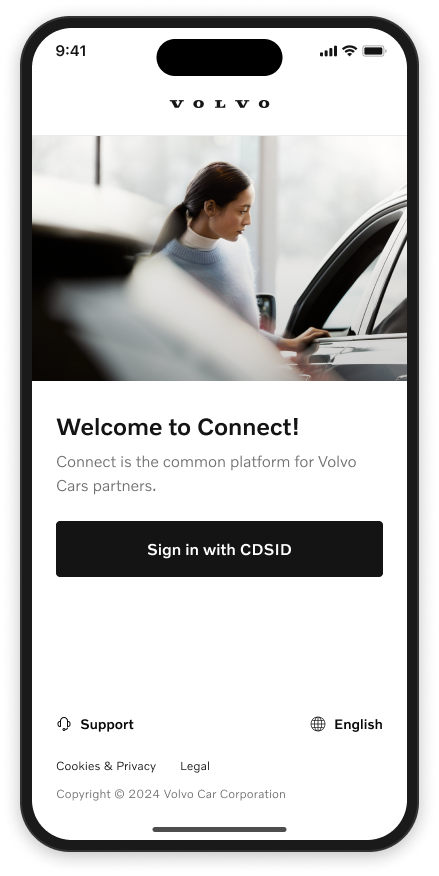
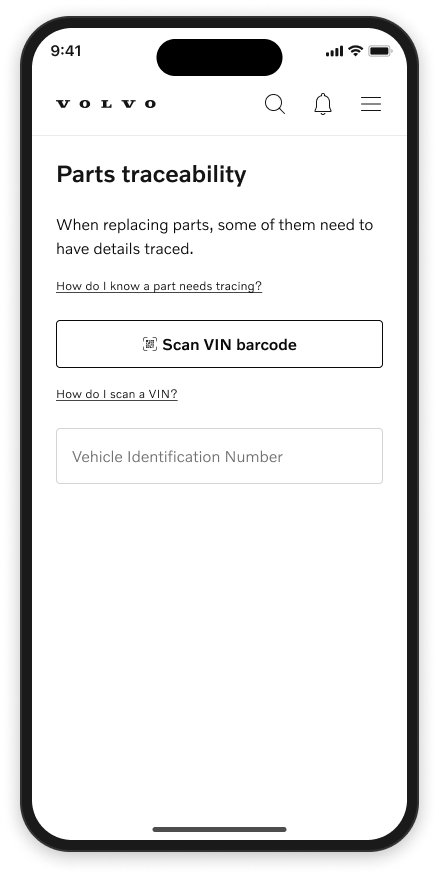
As UX Lead, my responsibility was to turn that requirement into a product direction the team could deliver and a workflow technicians could use. I led the design from early discovery through global launch, working across product and engineering to connect regulatory obligations with the realities of workshop work.
Defining the experience before designing the screens
We knew what information the business needed. The harder question was how collecting it would fit into a technician’s day.
50,000+ safety parts
2 000+ authorized workshops
The task crossed several boundaries: between desktop and mobile, between existing systems and a new application, and between digital information and physical components. Different parts also presented their identifiers in different ways. Treating tracing as an isolated form would miss much of that complexity.
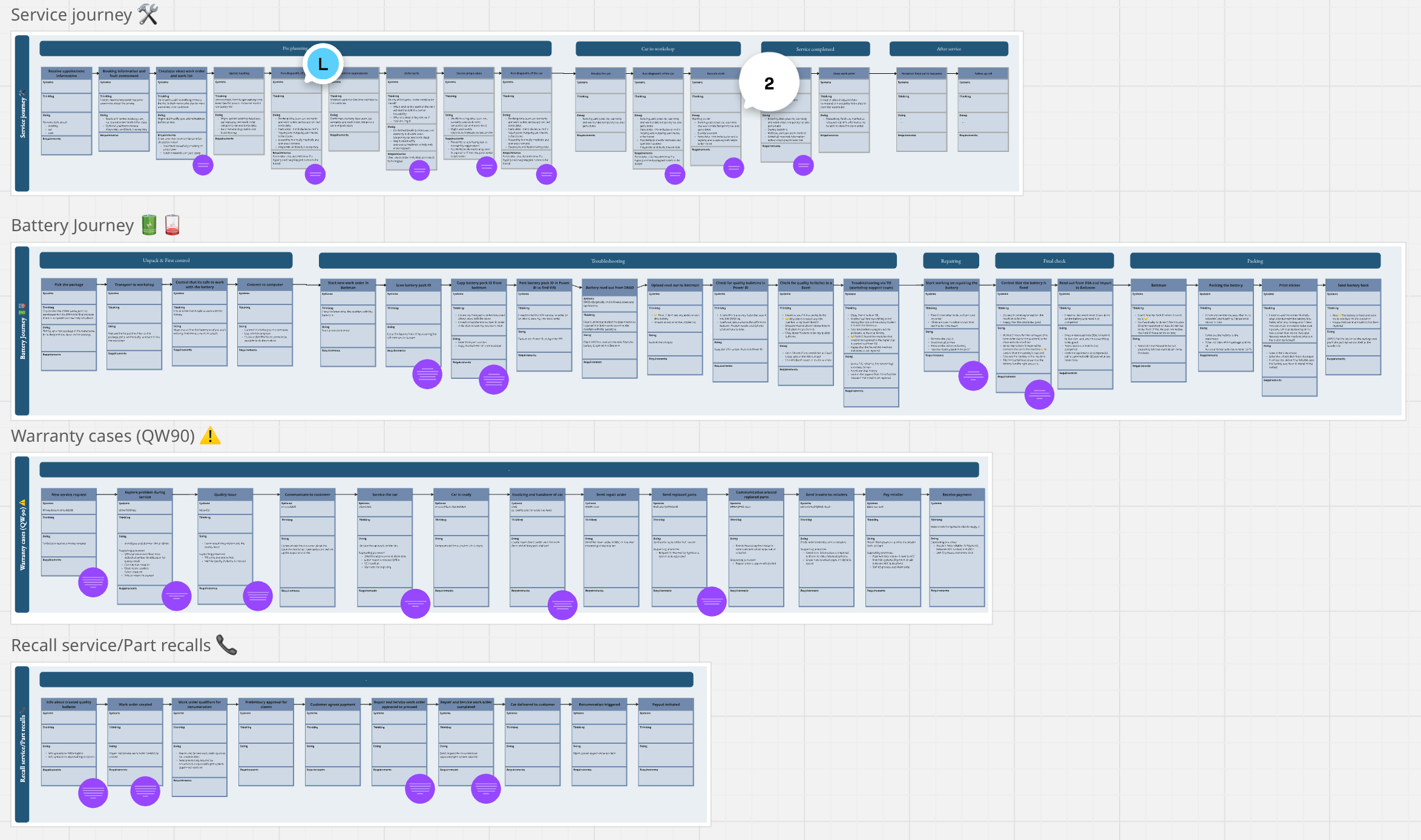
I initiated and facilitated focused design sprints to help the team work through these questions together. Through workshops with users and stakeholders, I mapped four key journeys and used them to establish a shared understanding of the service.
Design Sprint
Workshop facilitating
This work gave product and engineering a concrete foundation for decisions: where tracing should begin, what technicians needed at each stage and how the experience would fit into the existing workshop environment
Bringing the interaction closer to the vehicle
Mobile-first was a response to the context of use, not simply a screen-size decision.
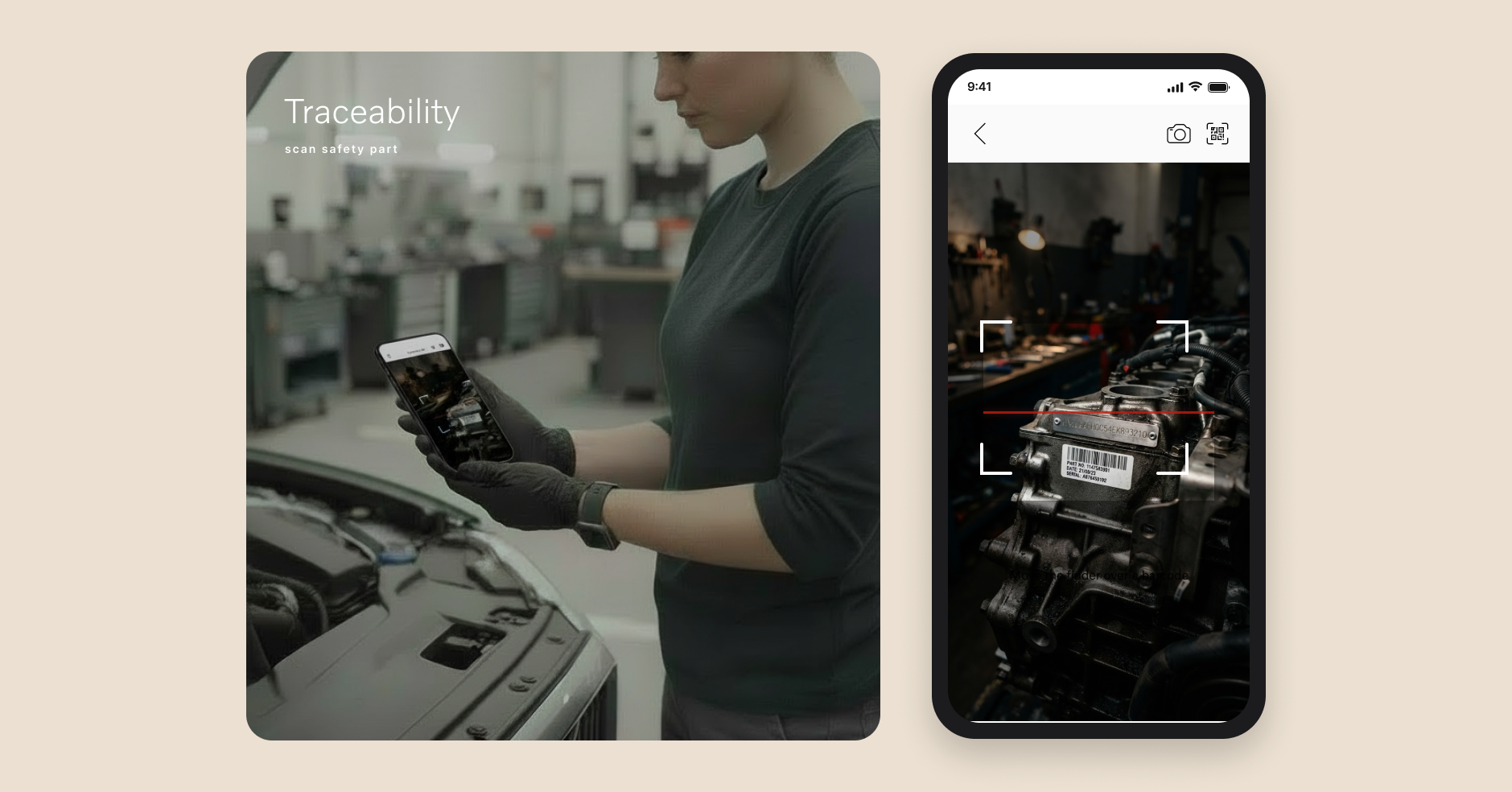
Technicians encountered information about required tracing on desktop, but the component they needed to identify was beside the vehicle. The experience therefore had to connect those moments without treating them as separate tasks.
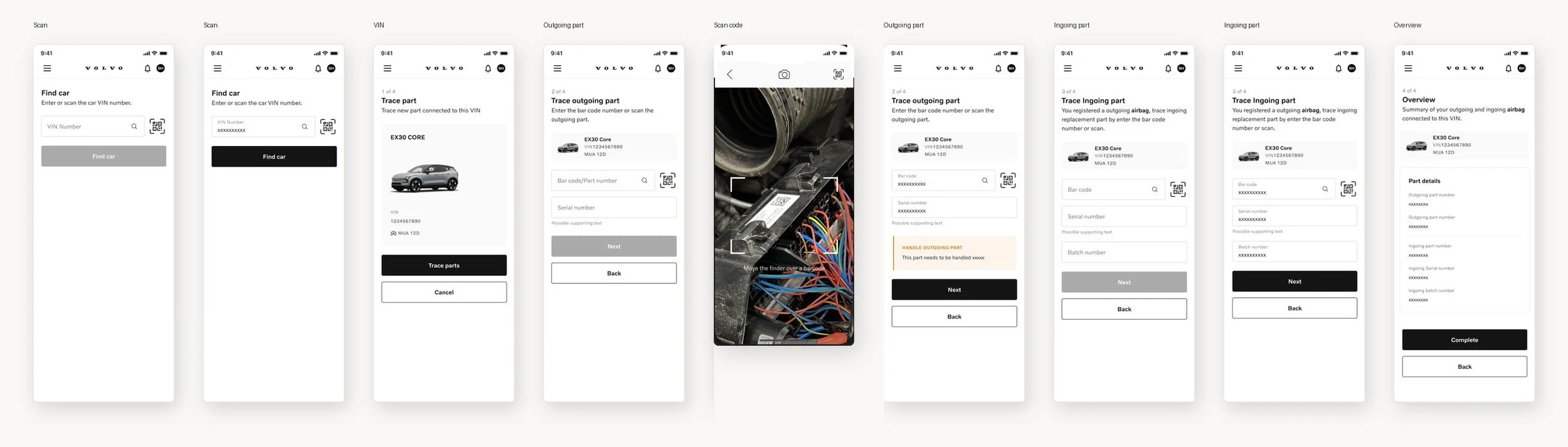
I shaped a workflow that linked guidance on desktop with recording in Connect on a phone, allowing technicians to work close to the part. Desktop support remained available for workshops with different routines. My focus was on continuity across the journey, from recognising the requirement to completing the record.
Using research to guide delivery
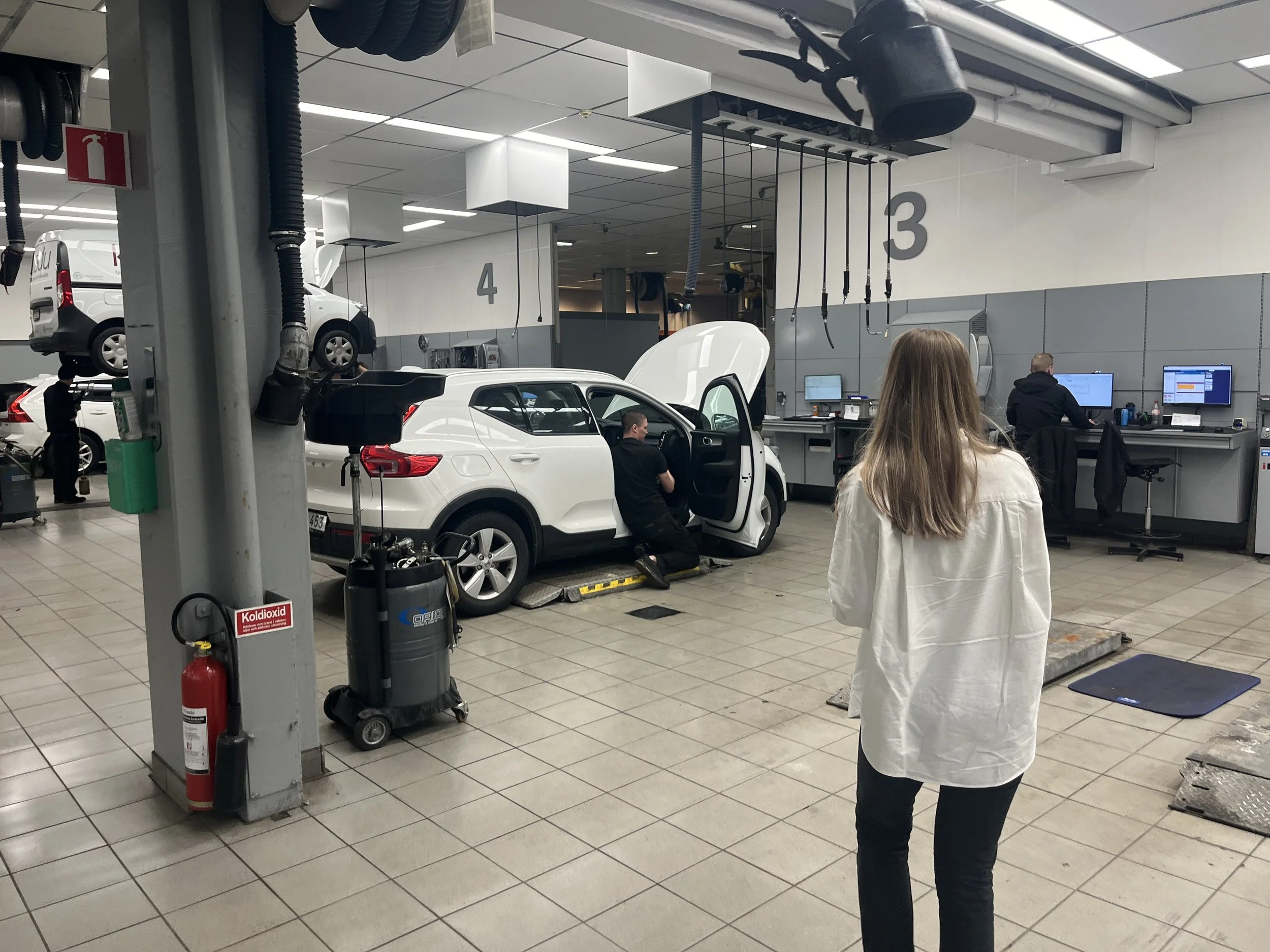
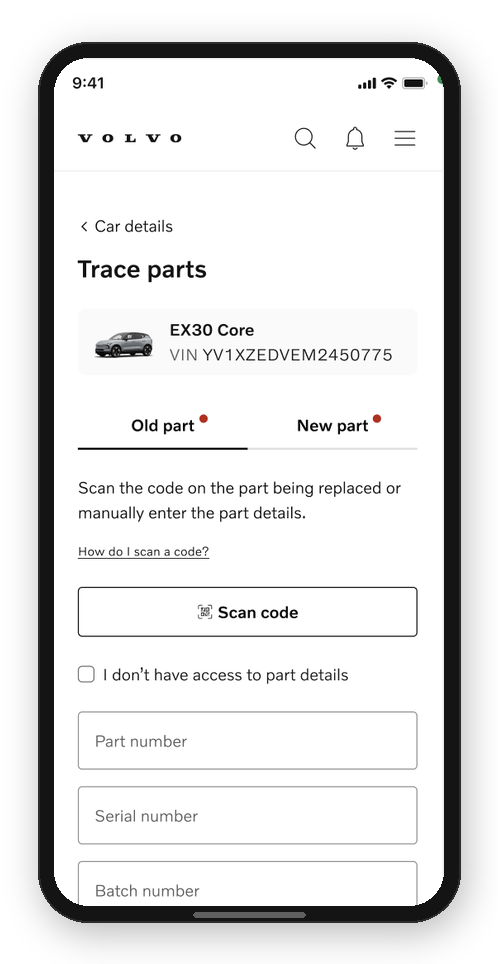
As the experience developed, team usability testing challenged assumptions about what technicians would understand. The findings showed that the distinction between removed and replacement parts was not always clear, and that users could mistake an intermediate step for completion.
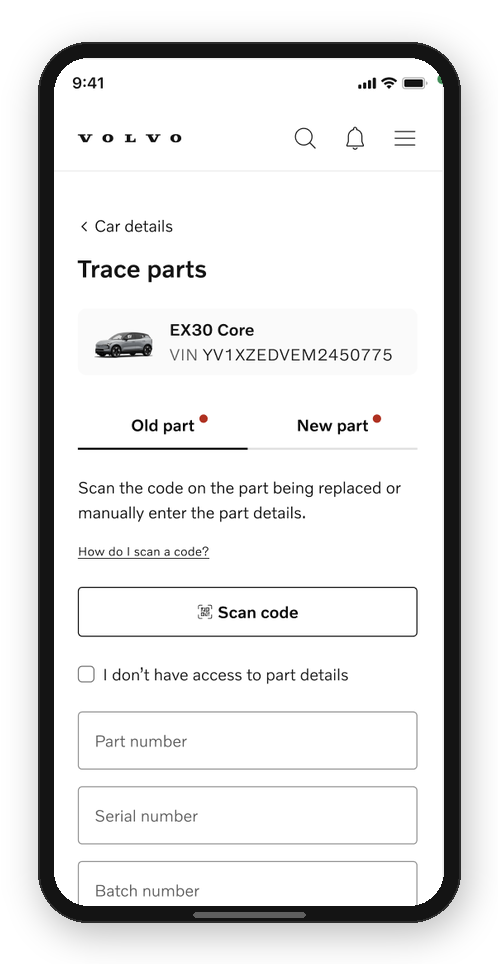
Users did not understand the terms incoming and outgoing parts
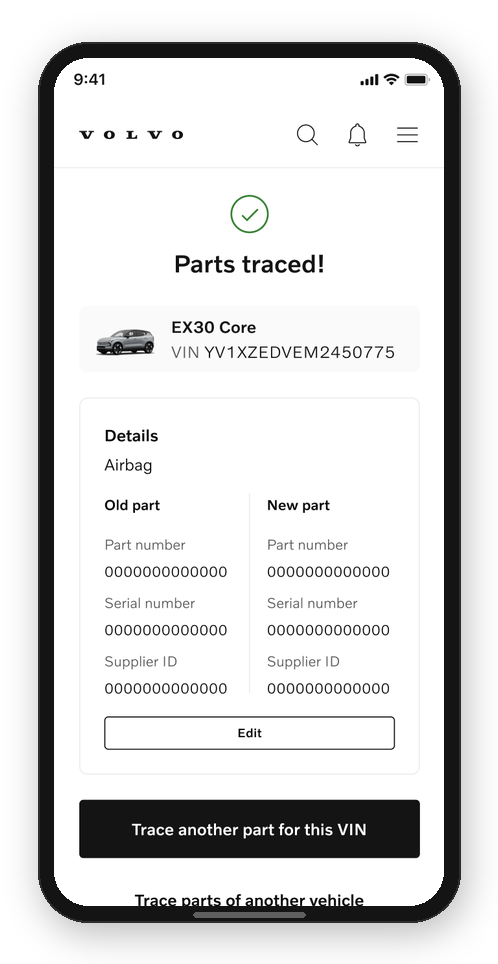
These insights informed clearer language, more visible task status and a simpler completion flow. For me, they reinforced the importance of keeping the team focused on whether technicians understood the work, rather than whether every requirement had a corresponding field or screen.
A global release, with wider dependencies
The first version launched in December 2024, introducing a mobile-first tracing workflow into Volvo’s global workshop ecosystem.
80+ Markets
15 000+ Daily users
Learnings
The release also demonstrated the limits of solving the problem through software alone. Inconsistent physical labels affected the usefulness of the information being recorded. Interface improvements could address parts of the experience, but reliable traceability also depended on standards beyond the product team’s control
My contribution
My contribution was to create direction across that complexity: bringing disciplines together, defining the connected service journey and carrying the design through to launch. The project reflects how I approach senior UX work, by making complex requirements actionable without losing sight of the people expected to fulfil them.